Get Free Consultation!
We are ready to answer right now! Sign up for a free consultation.
I consent to the processing of personal data and agree with the user agreement and privacy policy

We are ready to answer right now! Sign up for a free consultation.
I consent to the processing of personal data and agree with the user agreement and privacy policy
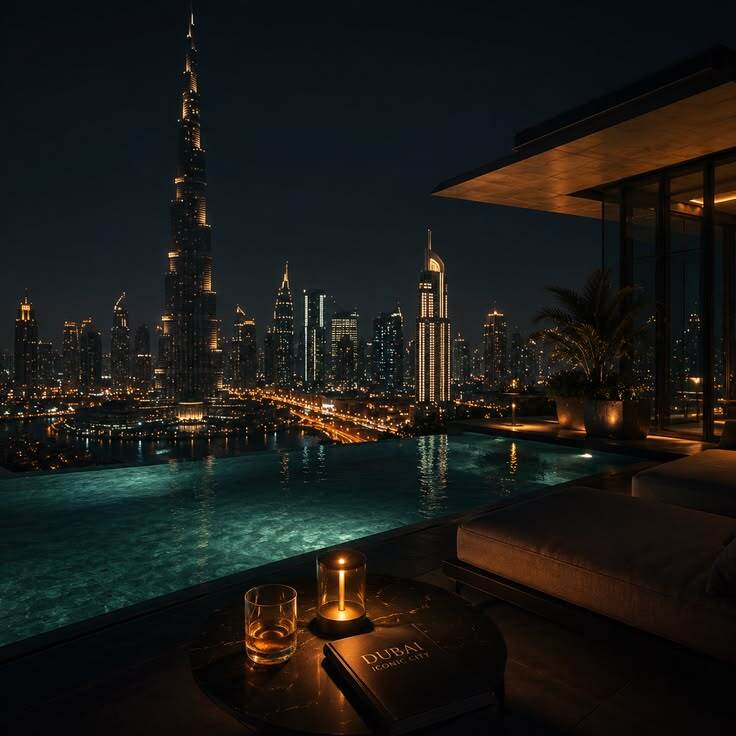
For decades, the UAE’s skyline has symbolized ambition, growth, and architectural innovation. Today, however, the country’s real estate story extends far beyond iconic towers and landmark developments. Property has become increasingly intertwined with lifestyle, sustainability, mobility, tourism, technology, and economic diversification—creating one of the world’s most sophisticated investment landscapes.
Demand is no longer driven primarily by short-term speculation. Instead, investors are prioritizing long-term value creation, recurring income streams, and developments capable of supporting evolving lifestyle and business needs. This transformation is reshaping how real estate is viewed across the country, from Dubai and Abu Dhabi to Sharjah, Ras Al Khaimah, and emerging growth corridors that are attracting increasing investor attention.
A Market Built on Confidence
The UAE has spent years building a real estate ecosystem anchored by investor confidence. Supported by progressive regulations, world-class infrastructure, global connectivity, business-friendly policies, and long-term residency initiatives have created a stable environment that continues to attract international capital.
What distinguishes the market today is its growing diversity. Investors are increasingly prioritising integrated communities that combine residential, retail, healthcare, education, and lifestyle amenities, creating multiple pathways for sustainable growth and long-term value creation.
Lifestyle-Led Communities Are Driving Demand
One of the most significant shifts in the UAE property market is the rise of community-centric development. Modern buyers are no longer simply purchasing square footage, instead they are investing in convenience, connectivity, and quality of life.
Communities featuring schools, healthcare facilities, retail hubs, green spaces, cycling networks, co-working environments, and leisure amenities are increasingly outperforming traditional standalone developments. This trend is influencing demand across multiple demographic groups.
Young professionals are seeking connected urban environments that support hybrid working and social engagement. Families are prioritizing master-planned communities with enhanced amenities and educational infrastructure. Entrepreneurs, digital nomads, and retirees are also contributing to demand for developments that offer flexibility, accessibility, and long-term lifestyle value. As a result, residential real estate has become significantly more nuanced, creating opportunities across various price points and asset classes.
Income, Hospitality, and Commercial Growth
Rental demand remains one of the strongest pillars supporting the UAE property market. Investors increasingly view income-generating properties as long-term wealth-building assets that provide both recurring cash flow and capital appreciation potential.
At the same time, hospitality-linked real estate is emerging as a major growth segment. This sustained demand is creating opportunities in serviced apartments, branded residences, holiday homes, and short-term rental properties.
The commercial sector is also evolving as companies are increasingly seeking flexible office environments, innovation hubs, and mixed-use business districts that promote collaboration, employee wellbeing, and operational efficiency. Demand remains particularly strong for premium office spaces located near transport networks and integrated lifestyle destinations.
Industrial Real Estate Gains Strategic Importance
Beyond residential and commercial assets, industrial and logistics real estate is becoming an increasingly attractive investment category. The UAE’s strategic position connecting Asia, Europe, and Africa continues to support demand for warehousing, logistics parks, manufacturing facilities, and trade-focused infrastructure.
Growth in e-commerce, supply chain diversification, and regional industrial expansion is further strengthening the sector’s long-term outlook. For investors seeking diversification beyond traditional property assets, industrial real estate is emerging as a compelling opportunity.
Sustainability and Technology Shape the Future
Sustainability is no longer viewed as a premium feature—it is becoming a core investment consideration. Developers are integrating energy-efficient systems, smart mobility solutions, water conservation technologies, and sustainable urban planning principles into new projects. Features such as solar energy integration, electric vehicle infrastructure, pedestrian-friendly design, and expansive green spaces are attracting growing interest from both investors and end-users.
Technology is driving a similar transformation. Artificial intelligence, predictive analytics, virtual property tours, blockchain-enabled transactions, and smart asset management systems are reshaping how investors discover, evaluate, acquire, and manage assets. Access to real-time market intelligence is encouraging more data-driven decision-making while enhancing transparency and efficiency across the sector.
Emerging Destinations Expand Opportunities
While Dubai remains a global real estate powerhouse, investors are increasingly exploring opportunities across other UAE markets. Ras Al Khaimah is attracting attention through tourism expansion and lifestyle-oriented developments. Sharjah continues strengthening its appeal through affordability, educational infrastructure, and cultural identity.
Abu Dhabi’s focus on technology, sustainability, finance, and culture is generating opportunities across multiple asset classes. This geographic diversification is creating a more balanced and resilient national property ecosystem while expanding investment opportunities beyond traditional hotspots.
Looking Beyond the Skyline
The UAE’s property sector is no longer defined by a single narrative. It has evolved into a diversified and increasingly mature ecosystem supported by strong fundamentals, progressive regulation, global connectivity, and a long-term economic vision.
Residential, hospitality, commercial, industrial, logistics, mixed-use, and sustainability-focused developments are collectively shaping the next phase of growth. While the skyline continues to capture global attention, the real investment story lies beneath it—in the creation of connected communities, future-ready infrastructure, and resilient economic ecosystems.
For investors willing to look beyond short-term market cycles, the UAE’s diversified property market offers opportunities that extend far beyond individual developments. It represents participation in one of the world’s most ambitious and future-focused growth stories.
Conclusion
The UAE’s real estate market is evolving beyond iconic skylines into integrated, future-ready ecosystems. Driven by diversification, sustainability, and technology, it offers investors resilient, long-term opportunities across residential, commercial, industrial, and lifestyle-led developments, reinforcing its position as one of the world’s most dynamic and strategically positioned property investment destinations.