Get Free Consultation!
We are ready to answer right now! Sign up for a free consultation.
I consent to the processing of personal data and agree with the user agreement and privacy policy

We are ready to answer right now! Sign up for a free consultation.
I consent to the processing of personal data and agree with the user agreement and privacy policy
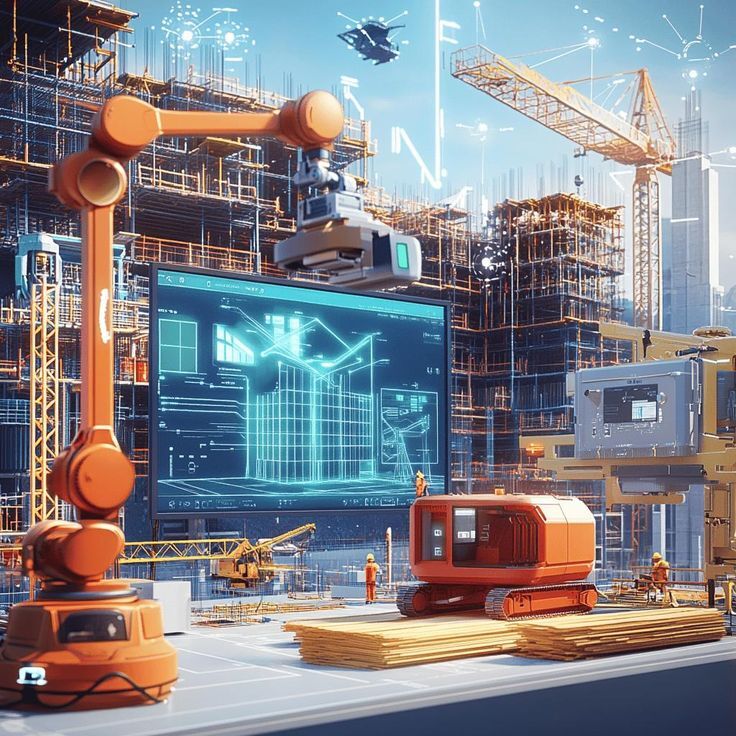
Dubai is once again setting the global pace for innovation, this time in the construction sector. Dubai Municipality has unveiled a global challenge to build the world’s first residential villa entirely constructed using robotic systems, signalling the emirate’s ambition to modernize its building industry and cement its role as a hub for advanced construction technologies.
The initiative is more than just a technological experiment. It is designed to move automated construction from the lab into scalable, real-world applications, redefining how homes can be built and offering a blueprint for global adoption. An international consortium of over 25 technology companies and academic institutions will collaborate on the project, managed in partnership with Zacua Ventures and the Würth Group.
The $30 Billion Opportunity
Dubai’s focus on automated construction aligns with global industry trends. The Municipality’s recently released Global ConTech Report projects worldwide investment in construction technology to exceed $30 billion by 2033, growing at an annual rate of 17.5%. This growth is largely fueled by a global shortage of skilled labour and the rising reliability of additive manufacturing and robotics in construction.
To support this growth, a ConTech Working Group has been formed in collaboration with Dubai Chambers. The group provides a structured platform for government entities, developers, and researchers to coordinate on regulatory standards, investment pathways, and commercial adoption strategies.
The 70-70 Strategy: Transforming Construction
The global challenge is complemented by the 70-70 Strategy, a roadmap launched in partnership with Sobha Realty. The strategy aims to shift 70% of construction tasks to off-site manufacturing and achieve 70% automation within those factories by 2030.
This dual focus—robotic on-site construction and automated off-site production—reflects a comprehensive approach to modernizing Dubai’s building sector, emphasizing efficiency, quality, and scalability. It also signals a shift toward sustainable construction methods, as factory-based processes reduce waste, improve precision, and minimize the environmental footprint of traditional construction.
Investment Implications
The robotic villa initiative offers exciting opportunities for investors and developers. Automated construction promises faster project timelines, lower labour costs, and consistent quality—key factors that can improve ROI. Furthermore, as Dubai positions itself as a global showcase for ConTech solutions, early adopters can gain a first-mover advantage in a market that is likely to see increased demand for innovative, high-tech housing.
Investors should also consider the long-term value of intellectual property and technology partnerships. Collaborating with global tech companies and research institutions offers access to cutting-edge methods and materials, creating potential for licensing or scaling projects beyond Dubai.
Sustainability and Smart Construction
Automation in construction is not just about speed and efficiency; it also has a sustainability impact. Robotic construction and off-site manufacturing reduce material waste, energy use, and environmental disruption on-site. Moreover, smart design and precision assembly enable long-lasting, resilient structures, aligning with Dubai’s commitment to sustainable urban growth and the UAE’s broader environmental goals.
Global Collaboration and Knowledge Sharing
The villa project is also a model for international collaboration, involving over 25 companies and universities from around the world. By sharing expertise, testing new materials, and validating robotic systems, Dubai is creating a knowledge hub that can influence construction practices globally. This collaborative approach reinforces the emirate’s status as a go-to destination for technological experimentation in construction.
Looking Ahead
The combination of a dedicated innovation hub, global partnerships, and clear automation targets ensures that the emirate is not just experimenting with technology—it is shaping the blueprint for the next generation of construction. If successful, it could redefine residential construction, proving that the future of housing lies at the intersection of technology, design, and sustainability.
Source: https://www.dm.gov.ae/