Get Free Consultation!
We are ready to answer right now! Sign up for a free consultation.
I consent to the processing of personal data and agree with the user agreement and privacy policy

We are ready to answer right now! Sign up for a free consultation.
I consent to the processing of personal data and agree with the user agreement and privacy policy
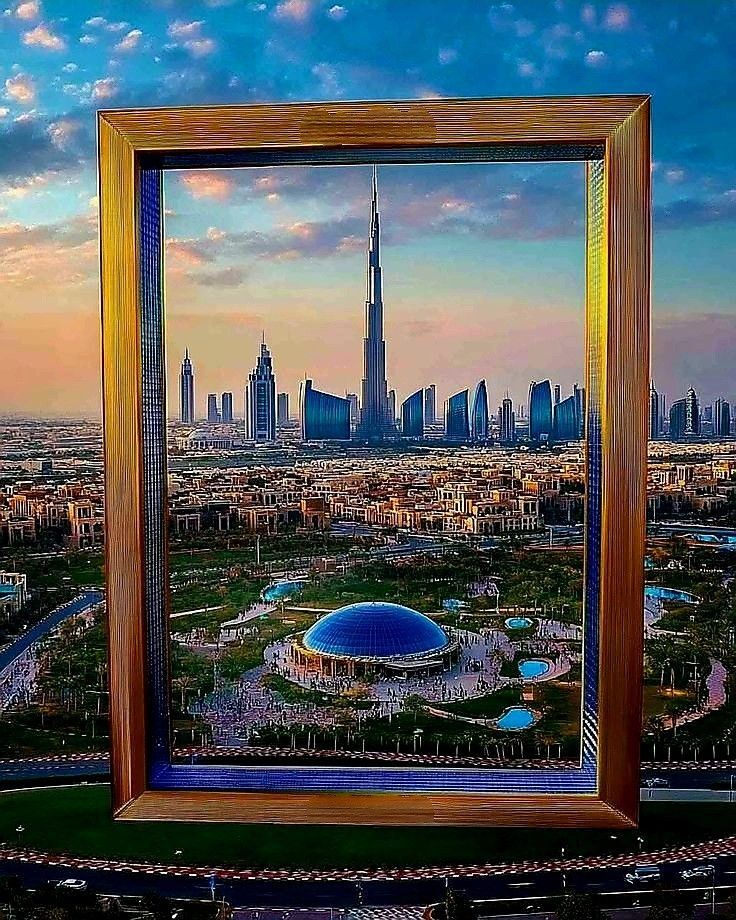
Dubai’s real estate market in 2025 has not just experienced growth; it has redefined the very scale of its operations. With a staggering 215,736 property transactions executed at a total value of AED 686.8 billion, the market has delivered its strongest performance on record.
This remarkable achievement is underscored by the fact that value growth has outpaced transaction growth, indicating rising prices and larger average deal sizes. As we transition into 2026, the dynamics of the market are shifting, and investors must adapt to these changes.
What the Numbers Really Tell Us
The statistics from 2025 paint a vivid picture of a thriving market. The transaction volume grew by 18.7% year-on-year, while the transaction value surged by 30.9%. Notably, off-plan sales accounted for nearly 70% of all deals, highlighting a strong preference for new developments among buyers.
Additionally, prime residential pricing averaged approximately AED 1,755 per square foot, reflecting robust demand for high-quality properties. These figures indicate a market driven by both local and international investors seeking opportunities in a city renowned for its luxury and innovation.
The Supply Question Everyone Is Asking
As we move into 2026, the supply landscape is evolving. Currently, over 450,000 residential units are under development in Dubai. In 2025, only about 50,000 units were delivered, while over 215,000 transactions were recorded, indicating that demand significantly outpaced new supply.
Looking ahead, more than 200,000 units are expected to approach delivery in 2026, which could lead to potential pricing pressure, particularly in high-density, investor-heavy segments. Investors should remain cautious and strategic in their approach to new developments, considering the evolving market landscape.
Market Analysis
The Dubai real estate market is poised for transformation as we enter 2026, with a projected total value of new developments exceeding AED 100 billion by 2028. As 200,000 units are expected to be delivered by the end of 2026, the current absorption rate stands at approximately 75% for newly launched properties. Recent surveys indicate that 65% of buyers prioritize sustainability features, while 55% seek larger living spaces that accommodate work and leisure.
Residential prices have appreciated by 30.9% in 2025, with off-plan sales representing 70% of total transactions. This data underscores a robust demand for high-quality properties, particularly in prime locations, which are best positioned to absorb new supply as we move forward.
Where Risk and Opportunity Diverge
As the market evolves into 2026, different segments are exhibiting varying levels of risk and opportunity. Apartments offer high liquidity but are increasingly sensitive to price changes, making them a riskier investment in volatile conditions. Conversely, villas and townhouses are experiencing lower transaction volumes but demonstrate stronger price resilience, making them a safer bet for long-term investment. Properties in prime locations are best positioned to absorb new supply, attracting stable investment and providing a buffer against market fluctuations.
What Smart Capital Will Focus On in 2026
As we transition into 2026, savvy investors will shift their focus to several key areas. Understanding absorption rates will be critical, as it reveals how quickly new units are being sold. Additionally, investors should pay close attention to supply timing, noting when new units are expected to hit the market.
The quality of the asset will take precedence over attractive payment plan incentives, prompting investors to prioritize properties that offer long-term value. In this maturing market, leveraging data analytics will be essential for navigating complexities and capitalizing on emerging opportunities.
Conclusion
As we look ahead to 2026, the Dubai real estate market presents both challenges and opportunities. With record growth in 2025, the landscape is shifting, and investors must adapt to the changing dynamics. By focusing on absorption rates, supply timing, and asset quality, investors can position themselves for success in a market that is evolving rapidly. Ultimately, selectivity will define returns in this competitive environment, making informed decision-making crucial for future success.
Source & References
Dubai Land Department. (2025). Real Estate Market Overview. | RERA. (2025). Dubai Development & Delivery Report. | DXB. (2026). Dubai Real Estate Market Overview and Analysis until December 2026. | CBRE Middle East. (2025). Dubai Real Estate Market Outlook. | Knight Frank. (2025). Dubai Residential Market Review. | JLL. (2025). Dubai Real Estate Market Outlook.