Get Free Consultation!
We are ready to answer right now! Sign up for a free consultation.
I consent to the processing of personal data and agree with the user agreement and privacy policy

We are ready to answer right now! Sign up for a free consultation.
I consent to the processing of personal data and agree with the user agreement and privacy policy
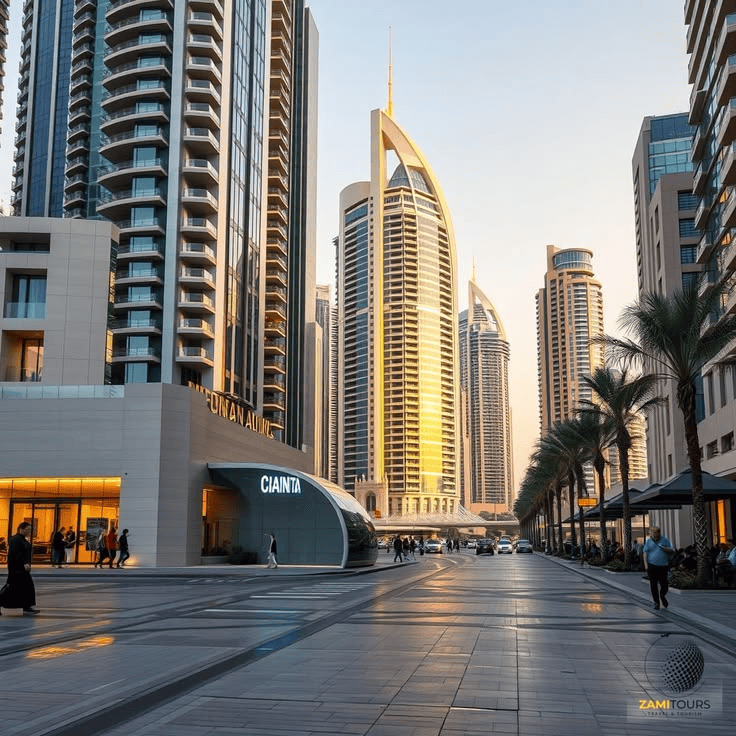
Something interesting is unfolding across Dubai’s hospitality landscape. Some of its most recognised luxury hotels are temporarily closing, scaling back operations, or entering phased refurbishment programmes. On the surface, it may look like disruption. But underneath, it signals something far more important—confidence in the long-term strength of Dubai’s tourism and real estate-backed hospitality market. This is not a reaction to weakness; it is a strategic reset.
Dubai’s luxury hotel sector is entering a new investment cycle where reinvestment, repositioning, and continuous upgrading are becoming the norm rather than the exception. And this shift is also happening in a broader regional environment shaped by geopolitical tensions involving Iran, Israel, and the United States—factors that occasionally influence global travel sentiment, but have not slowed Dubai’s long-term hospitality momentum.
Luxury Hotels Are No Longer “Built and Left”—They Are Constantly Rebuilt
In the past, hotel upgrades were occasional events. A renovation every 10 or 15 years was considered standard practice. That model no longer exists in Dubai’s premium segment. And today, hotels are being treated as living assets. They evolve continuously because guest expectations evolve faster than buildings can physically age. New luxury properties enter the market with stronger design language, more advanced technology, and highly curated guest experiences. That immediately resets expectations for everyone else. As a result, refurbishment is no longer about maintenance. It has become a competitive necessity.
Even Dubai’s Most Iconic Hotels Are Reinventing
Some of the world’s most recognisable hospitality assets are currently in upgrade cycles. The Burj Al Arab is undergoing an 18-month restoration, not to change its identity, but to preserve and strengthen it for the next generation of luxury travellers. It is a reminder that even global icons cannot rely on legacy alone.
Park Hyatt Dubai is also completing a structured refurbishment programme, reinforcing a broader theme in the market: long-standing assets must continuously reinvest to maintain relevance in a city where new luxury benchmarks are constantly being introduced. In Dubai, history is respected—but it is never allowed to stand still.
The Real Shift: Luxury Cycles Are Getting Shorter
One of the clearest changes in the market is the shrinking lifecycle of luxury hospitality assets. Hotels that once operated for a decade or more before major upgrades are now entering renovation phases much earlier. Armani Hotel Dubai, for instance, is undergoing its first major refurbishment since opening in 2010. At the same time, newer properties such as St Regis Dubai, The Palm—opened in 2021—are already enhancing selected spaces.
This acceleration reflects two realities. First, global luxury standards are rising faster than ever. Second, external uncertainty in the wider region occasionally influences travel behaviour, which encourages operators to protect asset performance early rather than late.
Hotels Are Upgrading Without Closing—And That Changes Everything
Another noticeable trend is how refurbishment is being executed. Full closures are becoming less common. Instead, hotels are upgrading in phases while continuing to operate. Atlantis Dubai is a clear example, where selected venues are temporarily closed for renovation while the rest of the property remains active.
JW Marriott Marquis is taking this even further, upgrading more than 1,600 rooms and multiple facilities while staying fully operational. This approach reflects a more mature operating model where revenue generation and asset enhancement happen at the same time. It also reflects the confidence operators have in continued demand—even during periods of global uncertainty.
Geopolitics Is the Background Noise, Not the Driver
It would be incomplete to ignore the broader regional context. Geopolitical tensions involving Iran, Israel, and the United States periodically shape global headlines and can influence travel sentiment across the Middle East. However, Dubai has consistently positioned itself differently.
While global perception may fluctuate during periods of uncertainty, actual demand in the city’s luxury hospitality sector has remained resilient over the long term. Rather than slowing investment, operators are responding by upgrading assets to strengthen competitiveness and reinforce Dubai’s positioning as a stable global destination for tourism, business travel, and long-stay luxury living.
Why This Wave of Upgrades Matters
The scale and timing of these refurbishments tell a clear story. Hotels are not upgrading because they are under pressure. They are upgrading because they expect stronger demand ahead. In a market like Dubai, where tourism is deeply connected to global capital flows, aviation routes, and investor sentiment, staying ahead of expectations is critical. A refreshed hotel asset directly translates into stronger pricing power, higher occupancy, and improved long-term returns. That is why reinvestment is accelerating now, not later.
Conclusion: Dubai’s Hospitality Sector Is Not Slowing—It Is Rebuilding Forward
What is happening across Dubai’s luxury hotel landscape is not a sign of contraction or caution. It is a deliberate reinvention cycle. Iconic hotels are being preserved. New properties are being upgraded earlier. Operating hotels are being enhanced without shutting down. And all of this is happening in a global environment where uncertainty exists—but confidence in Dubai remains intact. Ultimately, this is the real story: Dubai’s luxury hospitality market is not reacting to change. It is staying ahead of it.